
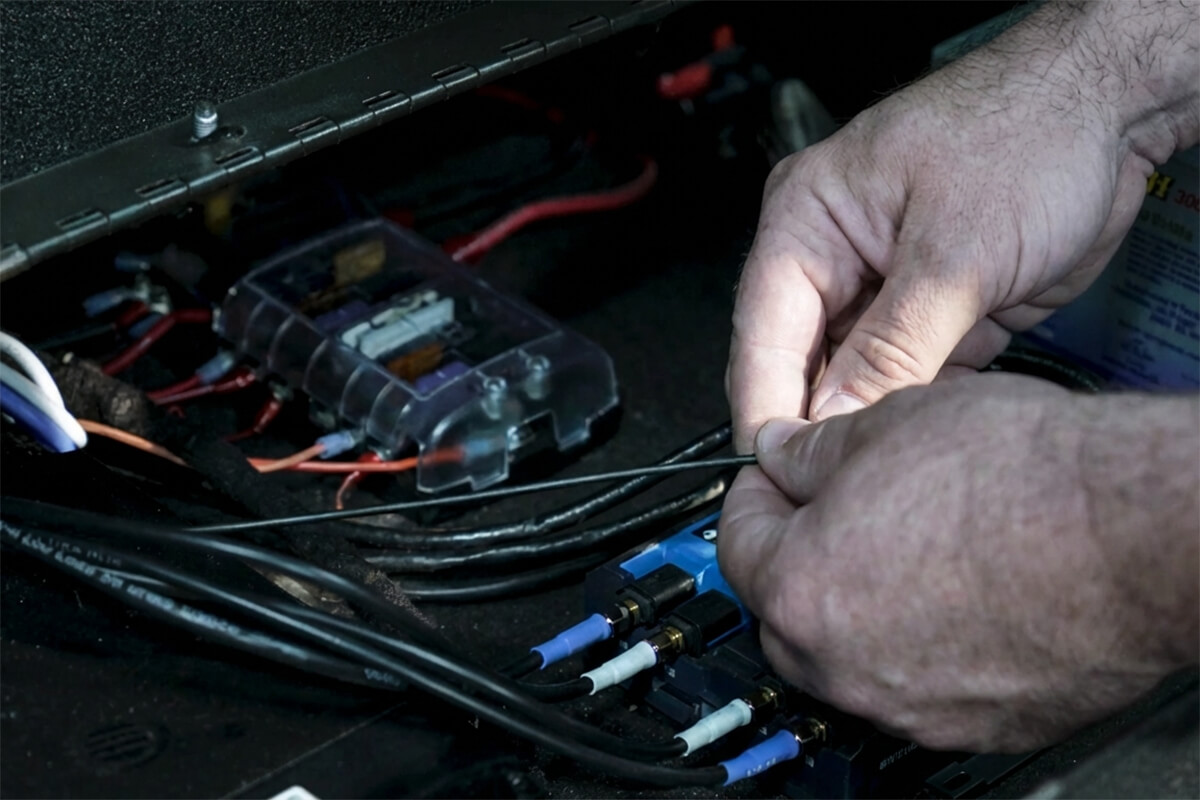
For many fleets, installation complexity is treated as a standard part of deploying in-vehicle connectivity. Antennas are mounted, cables are routed, routers are installed, power is connected, SIMs are provisioned, and settings are configured manually before a vehicle is ready for service.
That process may be familiar, but it creates more operational burden than many fleets account for upfront.
Installation time affects more than labor. It influences vehicle downtime, rollout speed, consistency across the fleet, and the long-term support requirements that follow. As connected vehicle deployments expand, those installation challenges carry greater operational consequences.
That complexity matters more as connected vehicle deployments expand. The installed base of fleet management systems in North America is projected to almost double by 2029, while video telematics deployments are also expected to more than double over the same period. As more vehicles depend on always-on connectivity, installation consistency becomes a larger operational issue.
Typical fleet connectivity installation complexity today
In a traditional router and antenna deployment, installation is a multi-step process that can vary widely depending on vehicle type, hardware selection, and installer experience.
A typical installation often includes:
- Mounting external antennas on the roof
- Drilling or using existing pass-throughs
- Routing multiple RF cables through the vehicle
- Mounting the router inside the cabin or equipment compartment
- Connecting power to the vehicle's electrical system
- Inserting and provisioning SIMs
- Connecting all hardware elements
- Manually configuring APNs, carrier settings, and failover rules
- Testing signal, connectivity, and application performance
Each of these steps introduces time, variability, and the potential for error. What may seem manageable on a single vehicle becomes harder to control across a larger fleet, especially when deployments span multiple locations, installers, or vehicle types. Because so much of the process is manual, outcomes also depend heavily on installer quality, making consistency harder to maintain.

Where failures happen
The challenge with traditional installation is that so many steps depend on manual precision.
Antenna placement directly affects signal performance. Long or poorly routed RF cable runs can introduce unnecessary signal loss. Loose or low-quality connectors can affect reliability over time. Inconsistent power wiring, incorrect grounding, and configuration mistakes can all create issues that may not appear until the vehicle is already in service.
Configuration errors add another layer of risk. Incorrect carrier settings, incomplete provisioning, or poorly implemented failover logic can all undermine performance even when the hardware has been installed correctly.
Many of these issues are not immediately visible. They surface later as intermittent connectivity problems, degraded performance, unexpected service calls, longer troubleshooting cycles, and delayed vehicle deployment.
In many cases, the root cause is not the hardware itself, but in how the router and antennas were installed in the first place.
How integrated systems simplify installs
Integrated vehicle gateways simplify installation by reducing the number of components that need to be mounted, connected, and configured separately.
Instead of mounting external antennas, routing multiple RF cables, and connecting them to a separately installed router, the installer mounts a single integrated unit, typically on the roof, and connects power. With fewer physical components, fewer connection points, and little or no RF cabling, the process becomes faster and far more standardized.
This can reduce installation time from several hours to a fraction of that, while also reducing variability from one vehicle to the next. It also supports broader fleet cost optimization by lowering labor, downtime, and follow-up service requirements. Zero-touch provisioning can further simplify deployment by reducing the manual network configuration required during setup.
For many fleets, the benefit is not just a faster install, but a more predictable one. Integrated systems reduce installation variability, eliminate the need to source and assemble multiple components, and reduce the risk of mismatched hardware across the deployment. They can also reduce the need for highly specialized installers, making deployments easier to standardize across locations and partners.

Lifecycle maintenance savings and fleet cost optimization
Architectures built around multiple components carry that complexity into ongoing maintenance. More cables, more connectors, more manually installed elements, and more configuration variability all increase the likelihood of service issues later. Fleets then spend more time troubleshooting, dispatching technicians, replacing components, and resolving performance inconsistencies across vehicles.
Those service events carry real cost and limit potential fleet management cost savings. According to Field Technologies Online, it can cost up to $1,100 to roll a truck, which means even a modest number of avoidable follow-up visits can add up quickly across a fleet. Reducing installation variability is one of the most effective ways of reducing fleet costs over time.
Integrated systems reduce many of those burdens at the source. By eliminating RF cable runs and reducing the number of exposed connection points, they remove some of the most common hardware-related failure points. They also help deliver more consistent signal performance, fewer connectivity drops, and fewer hardware-related issues across the fleet.
That standardization changes the support model. Instead of reacting to one-off hardware issues and inconsistent configurations, teams can manage a centralized platform with remote visibility and control. Provisioning becomes more automated, firmware updates can be delivered over the air, and policies can be applied fleet-wide. This reduces manual work, lowers support volume, and makes it easier to scale without increasing operational overhead. It also reduces the coordination burden that often comes with fragmented deployments, where troubleshooting can quickly turn into finger-pointing between vendors, installers, and service partners.
Simplify fleet connectivity from the start
Installation complexity is not inevitable. It is a result of how the system is designed. For many fleets, simplifying deployment is one of the most overlooked ways to reduce fleet costs. As fleets scale, the ability to deploy quickly, consistently, and with fewer failure points becomes more important than ever.
Integrated platforms such as AirgainConnect Fleet (AC-Fleet) are designed to help fleets avoid the installation complexity and support burden that often come with traditional router and antenna deployments. By combining the antenna, cellular modem, GPS and WiFi networking into into a single integrated unit, they help streamline installs, reduce failure points, and create a more predictable foundation for long-term performance for any fleet. Learn more.