

For many years, the standard approach to fleet connectivity was straightforward: mount antennas externally, install the router inside the vehicle, and connect the two with RF cables.
That architecture was shaped by the technical realities of the time. Signal quality inside vehicles was limited; rooftop antenna placement improved RF performance; and a modular design gave fleets the flexibility to choose carriers, modems, and components.
As fleet connectivity requirements have evolved, however, the limitations of that model have become more difficult to manage. What once offered flexibility now often introduces added complexity across installation, performance, troubleshooting, and long-term maintenance. This is becoming a key issue in broader fleet modernization efforts.
That shift matters because connectivity is playing a larger operational role across more vehicles. The installed base of fleet management systems in North America is projected to grow from 19.2 million at the end of 2024 to 33.2 million by 2029, with market penetration rising from 56.8% to 84.7%. Video telematics deployments are also expected to more than double over that period, increasing the volume of data and the importance of consistent, reliable in-vehicle connectivity. This growth is part of a larger shift toward connected vehicle technology across commercial fleets.
As more fleets depend on connectivity for video, cloud applications, diagnostics, and real-time communications, the underlying architecture carries greater operational consequences. In that environment, the weaknesses of traditional router and antenna deployments become harder to ignore.
Challenges of the legacy model
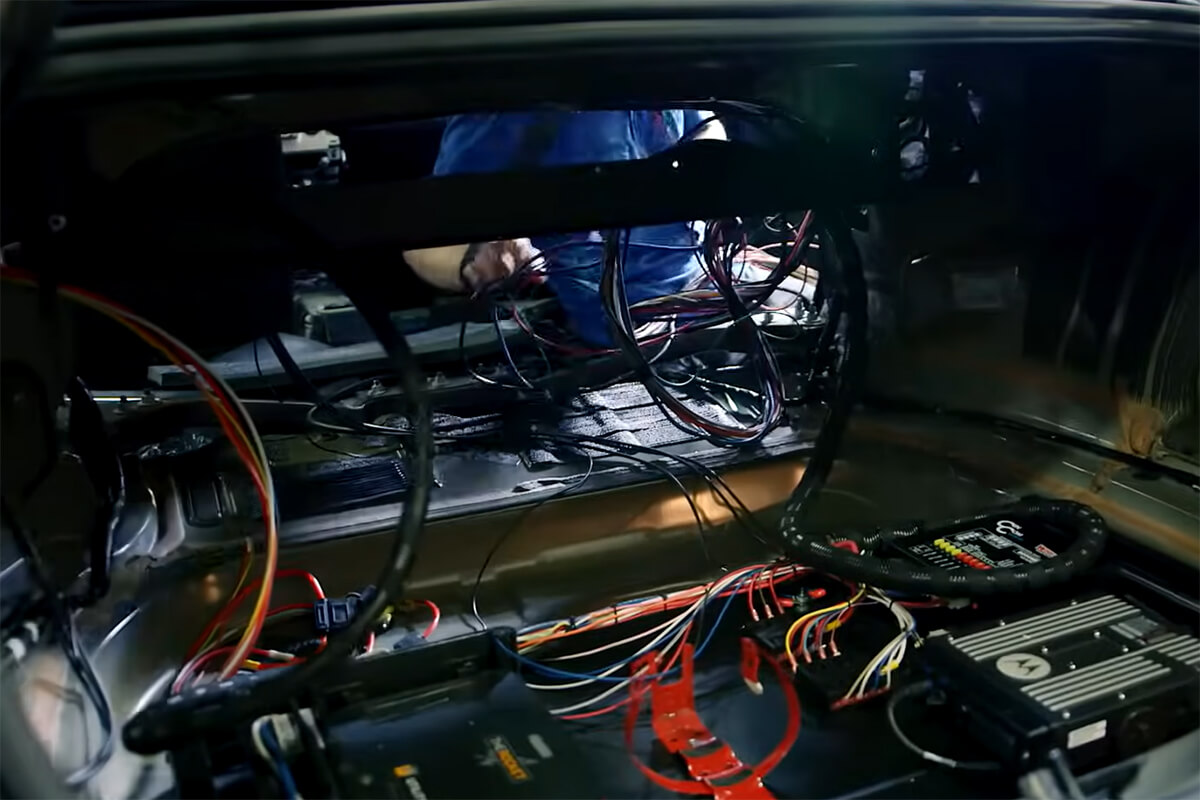
Traditional fleet connectivity architecture relies on a collection of separate components: router, antenna, RF cables, connectors, power elements, and SIM management. While this modular design gives fleets flexibility in how systems are configured, it also creates a more fragmented deployment model.
Over time, that fragmentation has become harder to manage. Components are often sourced from different vendors, installed manually, and deployed across vehicles with varying configurations and installation quality. As a result, consistency becomes more difficult to maintain across the fleet. What began as a flexible, best-of-breed approach has gradually become a disjointed stack of separately sourced and separately managed parts.
The challenge is not with any one component in isolation. It is with the operational demands of managing a system made up of many discrete parts, each of which can affect performance, reliability, and serviceability over time.
Signal loss starts at the cable
RF cables are one of the clearest examples of how small architectural choices compound over time.
Signal loss increases with cable length and frequency, which becomes especially relevant in LTE and 5G environments. Connector assemblies also introduce additional insertion loss, with one L-com example estimating 0.1 dB for a straight connector and 0.2 dB for a right-angle connector. These figures may appear modest in isolation, but they reduce signal margin before the modem even receives the signal.
In real fleet deployments, cable routing is rarely pristine. Bends, variable run lengths, installation quality, vibration, and environmental wear all affect performance over time. As a result, fleets can invest in high-quality antennas while still compromising real-world RF performance through losses embedded in the architecture itself.
More components mean more failure points
That same architecture also introduces more passive, installation-dependent components that can fail over time. In practice, the elements most likely to cause issues are not the modem itself but the surrounding components, such as cables, connectors, antennas, and power connections.
Because these parts are manually installed and exposed to moisture, corrosion, vibration, and temperature swings, they are more vulnerable to wear and inconsistency over the life of the vehicle. Connector and RF interface issues can contribute to weaker coverage, lower data rates, and dropped connections, while moisture ingress into coaxial systems can degrade transmission characteristics over time. In fleet environments, these are structural design vulnerabilities.
As fleets scale, the operational impact grows. A system that seems manageable across a small deployment can become a source of variability, troubleshooting, and maintenance across hundreds or thousands of vehicles.
Maintenance becomes harder to control
The operational burden of a fragmented architecture does not end at installation. It continues every time something underperforms, fails, or needs to be replaced.
When a connectivity system is built from multiple separately installed parts, troubleshooting becomes slower and less predictable. A single issue may stem from cable quality, connector integrity, antenna damage, power delivery, inconsistent installation, or configuration choices across different vendors. That makes root cause analysis more difficult, increases service time, and raises the likelihood of repeat visits.
At a small scale, those issues may be manageable. Across larger fleets, they become harder to control. Variability among vehicles, installers, and component combinations can lead to inconsistent performance across the fleet and a heavier support burden for field, IT, and operations teams.
The cost implications add up quickly. Industry estimates have put the average cost of a truck roll at roughly $1,000. Even a modest rate of service visits due to failures can translate into tens of thousands of dollars in avoidable annual support costs for a mid-sized fleet. More importantly, those costs come on top of the operational disruption caused by downtime, inconsistent connectivity, and added pressure on internal teams.

Why integrated architecture is a better fit for modern fleets
The weaknesses of traditional router and antenna deployments are structural limitations of an architecture built around separate components, longer RF paths, and more variables in the field.
Current fleet requirements place greater value on consistency, standardization, and lifecycle efficiency than on the component-level flexibility that originally made the legacy model attractive.
Integrated vehicle gateways address those priorities by bringing antenna, modem, and routing functions into a more tightly engineered system. They represent a more mature approach to connected vehicle technology, where performance and reliability are engineered as a system. This reduces the number of separate physical components, shortens or removes RF cable runs, and limits the variability introduced during installation. The result is a cleaner physical design, a more controlled RF path, and fewer opportunities for performance loss, failure, and service complexity over time.
Rather than forcing fleets to manage a loosely assembled stack, this approach is designed around reliability first.
As connectivity becomes more central to video, cloud applications, diagnostics, and real-time communications, those architectural advantages become more important. For fleets deploying at scale, systems designed to reduce inconsistency and lifecycle overhead offer a more practical foundation for long-term reliability.
Solutions such as AirgainConnect Fleet (AC-Fleet) reflect that shift, giving fleets an example of how integrated architecture can simplify deployment and reduce long-term support burden. For fleets evaluating integrated fleet solutions, this approach offers a more scalable path forward. Contact us today to earn more.