
Extending 5G coverage to support fleet operations at a large distribution facility
Organization: Major U.S. Food Distribution Warehouse
Industry: Food Distribution & Logistics
Region: United States
Use Case: 5G coverage extension for fleet telematics and truck-yard connectivity
Executive Summary
A major U.S. food distribution warehouse experienced a challenging 5G coverage gap in its truck yard, where the large warehouse building obstructed the existing cellular signal. Weak connectivity limited the ability of returning delivery trucks to upload vehicle diagnostics, location information, and other operational data from onboard telematics systems.
Working with Airgain, wireless systems integrator CTS Mobility deployed the Lighthouse™ 5G Intelligent Node to extend existing Verizon 5G coverage into the affected area without building a new cellular site.
Field testing demonstrated significant improvements in cellular performance. At one measured location, upload speeds increased more than 13-fold, from 2.47 Mbps to 32.8 Mbps. The installation was completed in just one day, demonstrating a practical approach to improving connectivity in challenging logistics environments.
The large warehouse building obstructed the existing Verizon 5G signal, creating a coverage gap in the truck parking area.
Initial measurements showed signal strength as low as -116 dBm, with limited access to high-bandwidth n77 5G service. Upload speeds of approximately 2–5 Mbps made it difficult for returning delivery trucks to transfer operational data from onboard telematics systems.
The facility needed a solution that could:
CTS Mobility worked with Airgain to deploy the Lighthouse™ 5G Intelligent Node, extending existing Verizon n77 5G coverage into the affected truck yard.
The outdoor-to-outdoor installation captured an available cellular donor signal and directed coverage toward the area obstructed by the warehouse building. By leveraging the existing network, Lighthouse eliminated the need for a new cellular site or dedicated wired cellular backhaul for the repeater function.
The deployment included:
Installation was completed in one day.
At one measured location, upload throughput increased from 2.47 Mbps to 32.8 Mbps, providing significantly greater bandwidth for fleet telematics data transfers.
Upload speeds improved at all three measured locations, reaching between 30.5 and 32.8 Mbps after deployment.
Download speeds also increased substantially, including an improvement from 20.6 Mbps to 337 Mbps at one location.
Additional post-deployment measurements near and between parked delivery trucks recorded upload speeds ranging from 23.6 to 30.6 Mbps.
The installation was completed in one day, using the existing Verizon 5G signal rather than requiring construction of a new cellular site.
| Metric | Before Deployment | After Deployment |
|---|---|---|
| Location 1 – Upload | 3.44 Mbps | 30.5 Mbps |
| Location 2 – Upload | 2.47 Mbps | 32.8 Mbps |
| Location 3 – Upload | 4.46 Mbps | 32.8 Mbps |
| Location 3 – Download | 20.6 Mbps | 337 Mbps |
Results reflect field measurements at this specific deployment. Actual performance varies by location and network conditions.
Large distribution warehouses and industrial facilities often experience cellular coverage gaps caused by buildings, equipment, and other physical obstructions. These gaps can affect fleet telematics, connected devices, and other operational applications even when strong cellular service is available nearby.
This deployment demonstrates how Lighthouse can extend existing 5G coverage into targeted areas without building a new cellular site. Combined with a partner-led deployment model, it offers a practical approach for organizations facing similar connectivity challenges.
As Andrew Brady, President of CTS Mobility, commented:
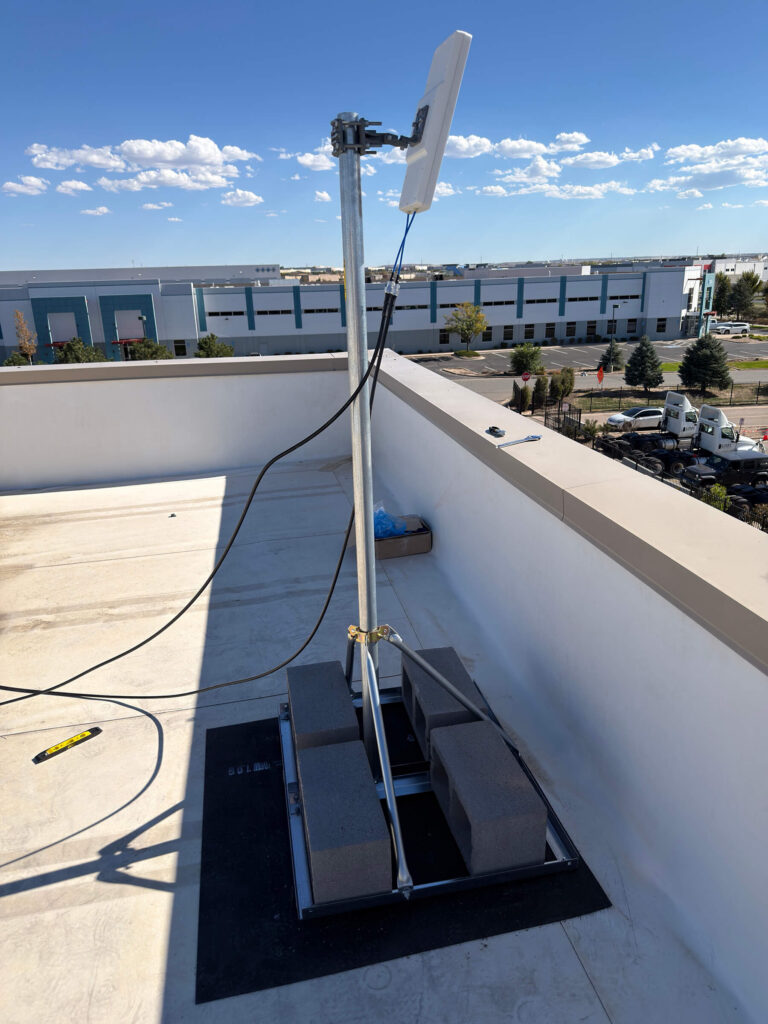

The large warehouse building obstructed the existing Verizon 5G signal, creating an area with weak reception and limited upload throughput despite stronger coverage elsewhere on the property.
Lighthouse uses an available cellular donor signal to extend coverage into targeted indoor or outdoor areas where the existing network does not adequately reach.
No new cellular site was required for this deployment. Lighthouse used an existing Verizon 5G signal without requiring dedicated wired backhaul for its repeater function.